Monday, April 27, 2015

Where in the world IS Carmen Sandiego: A Mystery Skype Presentation

Saturday I presented at the Clark County School District's 21st Century Skills Mini Conference at Sawyer MS. My session was on Mystery Skype, which has easily become one of my favorite learning activities. I have worked with several classrooms this year to connect them with other classes across the U.S.

In addition to this presentation, I created a series of posts with Mystery Skype resources. My presentation is embedded below, but fortunately/unfortunately I wasn't able to give it!


Instead, I decided that during our session it would be fun to have the teachers experience a real #MysterySkype to see how they are actually done. I reached out on Twitter and the totally awesome Yau-Jau Ku, who teaches in Venezuela, responded.

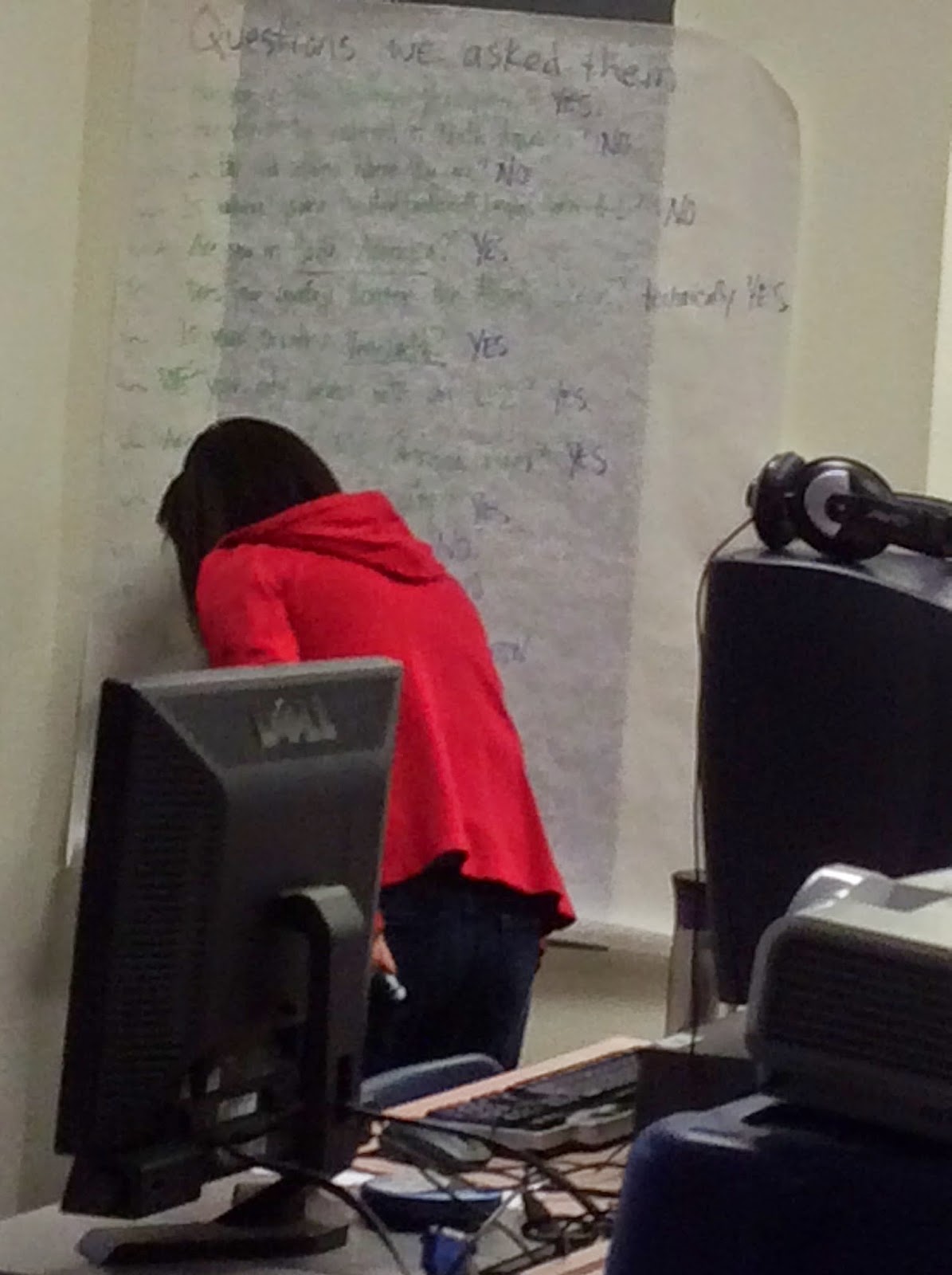
After the teachers arrived for my session I explained the idea of Mystery Skype in 2 minutes or less, assigned jobs to everyone, and got them all in to position. We then jumped right in with Mr. Ku and started asking questions.

After doing Mystery Skypes with 5th grade classes this year, it was hilarious to watch these teachers get just as excited! I have never seen a group cheer so loud when we finally were able to guess that Mr. Ku lives in Venezuela.

Unfortunately for us, he guessed our city before we could guess his. We actually ran out of time, because I still had some of my presentation to give! So we had to stop and let him tell us his city. I think we have some new Mystery Skypers now!




Read More »

Why have students blog?

Student blogging is one of my favorite activities to get students writing. When I had the opportunity to present at the Clark County School District's 21st Century Skills Mini Conference held at Sawyer MS I jumped at the chance to show teachers about blogging. I used the presentation to share my reasons for having students blog and helped teachers get started with the Kidblog platform.

My Haiku Deck presentation for the session is embedded below. Click the link to see presenter notes. The tutorial for Kidblog can be found here in PDF format.


Blogging Through the Fourth Dimension - Created with Haiku Deck, presentation software that inspires

This year I have been working with a teacher in 2nd grade to help her students write more. We decided to introduce blogging to the students. I am constantly amazed at the voice students are given through this opportunity.

If you have not tried blogging with your students, I highly recommend looking through the presentation and checking out these posts.

Read More »

Sunday, April 26, 2015

Pay it forward: The Book Whisperer

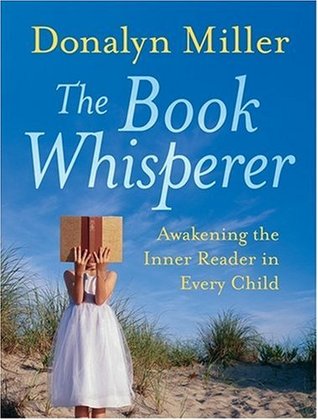
I recently finished reading The Book Whisperer by Donalyn Miller. This is a phenomenal book for anyone who wants to better understand how to help students become life long readers. The book is chock full of practical advice that can be used in any classroom. Many of her philosophies on teaching reading resonated with me. As I work in schools I see many teaching practices that I believe discourage reading instead of encouraging it. I wish more teachers and administrators would read this book.

The message of the book is that in order to create passionate, life-long readers, teachers must create a learning environment that encourages independent reading. This means restructuring literacy instruction so that students have more time to read, not just having students read during D.E.A.R. time. Students should also be allowed to read books that interest them, not just randomly assign books that the teacher feels they need to read.

She also calls out practices that teachers have traditionally done, but that, in reality, discourage reading. Some of these practices are the traditional reading log or whole class novels. She offers some great alternatives to each of these activities that will build strong readers.

One of the favorite points she makes is that the teacher his/herself must be a voracious reader. It's pointless to tell students that they must read when the teacher themselves doesn't read! Plus, it makes it a whole lot easier to have conversations with students when know about the books they are reading. During online classes that I teach, I often ask teachers to share the last book the read for pleasure. I'm always surprised by the number who said they haven't read recently or only name the book they are reading with their class.

Pay It Forward

This book was given to me by a librarian from one of my schools. I loved the book so much that I decided to follow her example and pass the book on to someone else. I wrote a shore message in the front of the book and asked whoever gets the book next to do a few things:

  • After reading it, pass this copy on to someone else.
  • Support good books and purchase your own copy for reference or to mark up.
  • Send me an email or tweet letting me know your thoughts on the content.

I then left the book in the teacher's lounge at one of my schools. The title will catch someone's eye and hopefully they'll pick it up and read it.


Read More »

Friday, April 24, 2015

Student Centered Coaching: My Takeaways

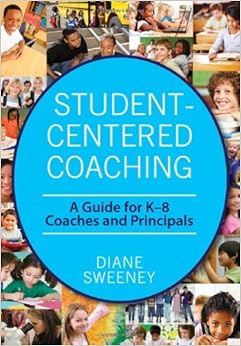
This week I participated in a 2 day Student Centered Coaching conference by Diane Sweeney hosted by CCSD. The Digital Learning Coaches joined the instructional coaches from the district to learn about coaching practices that help impact student learning.

Unfortunately, a lot of the content of the conference didn't seemed geared towards my role as a technology coach. There were a few good nuggets of information that helped me to refine my coaching role. But the models presented won't work with my job, mostly because I work with eight different schools so my times on campus are not frequent enough.

Here are my big takeaways from the conference.

Coaching is not about "fixing" people.

My role as a coach is not to do "deficit coaching" where I approach the teacher as if they had problems or faults that I need to fix. I shouldn't come in with my pre-defined agenda and try to shoehorn the teacher into that. Instead, I need to listen more to what the teacher is asking help for and guide the discussion towards the student goals associated with that (see below). My role is not to fix anything, but instead to meet teachers where ever they are at and help them improve their craft.

Student Goals

My coaching efforts need to be centered more on specific goals for student learning, rather than on trying to "fix" a teacher. I find that many times I am asked to model a specific iPad app or teach the students how to use a certain program. Often teachers say they want to learn more about using their interactive whiteboards, not realizing what the boards can actually do to change their pedagogy.

My biggest takeaway is that I need to focus my coaching with that teacher on student goals instead. In other words I should ask the teacher what their goals are for learning that app, what do they want the students to accomplish? I love this focus and believe it will help refine and give purpose to my coaching visits.

Redefine the Coaching Cycle

There was a fair amount of discussion about the coaching cycle. With traditional instructional coaches who are at 1 or 2 schools, they can meet with teachers on a regular and frequent basis. At the conference they participated in an activity to define how they would use a 4-6 week coaching cycle.

As a DLC I work at 8 different schools, secondary and elementary, and see teachers only once every 2 weeks. Obviously that kind of coaching cycle would not work. I decided that rather than having a time-based coaching cycle, I should have a skills based coaching cycle. The beginning of the coaching cycle might be where I teach a tool to a teacher. As we meet, we look at how that can be used to enhance or change their lessons, slowly working it into the teacher's pedagogy.

Another approach might be to look at what standards or student outcomes the teacher wants and work backwards from there. For example, if a teacher wants to increase student writing I can introduce blogging as a way to do that. Our meetings can then be focused on how to accomplish that, perhaps introducing the tools and concepts first, then modeling it, and then turning it over to the teacher as part of her regular instruction.

I would love to hear from other technology coaches to understand how the coaching model works for them. Our situation in this district seems unique in that we have so many schools to cover. If anyone has experience coaching at so many schools, I would love to hear how you do it!


Read More »

Tuesday, April 21, 2015

The Rights of the Reader

I'm currently reading Donalyn Miller's The Book Whisperer. This is an awesome book that makes me want to be a reading teacher or librarian! I already love books and everything she talks about resonates with me.

In chapter 4 she mentions The Rights of the Reader by Daneil Pennac. I had not seen this before, but now I think every teacher and librarian (adult!) should have this poster somewhere in their room.

What I love about this book is that Ms. Miller preaches independent reading and allowing students choice in what books they read. Many times my children have come home with assigned reading. Usually the books are of no interest to them or are on a level they don't understand. I think that teachers too often dictate when, where, and what books students can read. And I think that discourages reading instead. This poster reestablishes the rights readers have to choose their own reading material for whatever reason they want.


The version in her book is slightly different. Perhaps it was an earlier draft from Daniel Pennac. I like it better than the one on the poster, so I'm reproducing it here.

THE RIGHTS OF THE READER
by Daniel Pennac (2006)

  1. The right to not read.
  2. The right to skip pages.
  3. The right to not finish.
  4. The right to reread.
  5. The right to read anything.
  6. The right to escapism.
  7. The right to read anywhere.
  8. The right to browse.
  9. The right to read out loud.
  10. The right not to defend your tastes.


Read More »

Wednesday, April 15, 2015

#MysterySkype reflections

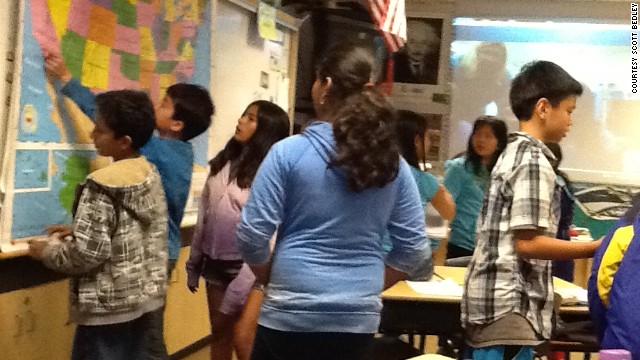
One of the hidden benefits of #mysteryskypes is having students work collaboratively to solve a problem. Students are researching, listening, and synthesizing information to try and reach the common goal of guessing the other class. An important part of working as a group is for each member to reflect on his/her contributions to the group.

In her blog post Assessment of Learning via Skype, Silvia Tolisanio points out that the experience is not about the tool (Skype), it's about the student learning. Because of the nature of a Mystery Skype call (the location is unknown), it's difficult to do pre-activities such as a KWL chart. But you can still prepare students be building geography skills and vocabulary, using Google Maps or Google Earth, and working with atlases and other maps.

Learning can also continue after the call by having students reflect on what they learned and how they performed as part of the group.  

Here are a few forms that can be used to reflect on the experience and their job. 

Self-Reflection: Taking Part in a Group - this one was created by the folks at Read, Write, Think.

Mystery Skype Reflection Form - this was created by a teacher and shared with me last year. I've forgotten who the original author was.

Assessment of Learning via Skype - Silvia Rosenthal Tolisano created this series of forms from her blog cited above that can be used by students before and after the Skype call.

Of course using blogs with your students is another great way to have them reflect on their whole Mystery Skype experience. It's great to have a class blog to share what happened, but also give students their voice and ask them to share individually about the whole experience.

How else do you gather feedback from students?

Read More »

Tuesday, April 14, 2015

Questions to ask during a #MysterySkype

Probably the hardest part about a Mystery Skype is having the students become critical thinkers. They have to think logically and have to know whether a question is a good one or not. The conversation can be fast and furious and if students aren't paying attention or thinking logically and critically, they might repeat questions or ask ones that aren't helpful at all.

If you are doing your first #mysteryskype, it's helpful to practice with your students prior to the actual call, especially if you are working with younger students. A good way to practice is to simply pick a state in your mind and have your students ask questions to guess which one.

Pernille Ripp, a fantastic teacher that first got me interested in Mystery Skyping, has a great list of questions to help you get started. I'm reproducing her list here.

For the USA
  • Are you in North America?
  • Are you in the United States?
  • Are you east of the Mississippi?
Depending on the answer to that, you can go in different directions:
If east of Mississippi:
  • Are you one of the original 13 colonies?
  • Do you border a Great Lake?
  • Do you border an ocean?
  • Do the Appalachians run through your state?
  • Do you border Canada?
  • Are you Northeast/Midwest/Southeast region?
  • Do you border the Gulf of Mexico?
If west of the Mississippi:
  • Are you in the West/Southwest region?
  • Do you border the Pacific?
  • Do the Rocky Mountains run through your state?
  • Do you border Canada?
  • Is your state landlocked?
  • Are you one of the contiguous states?
For Canada:
  • Are you in North America?
  • Are you in Canada?
  • Do you border a ocean?
  • Do you border Alaska?
  • Do you border the Hudson Bay?
  • Are you landlocked?
  • Does your province have a NHL team?
  • Do you border the United States?
  • Do the Rocky Mountains touch your province?
  • Are you north of British Columbia?


Remember that these are only suggestions to help the students get ideas. Your questions will totally depend on where the other class is and what kinds of clues you have. I would avoid vague questions such as Does it snow where you live? or Do you live in the north? Don't let the students start guessing state names too quickly. It is probably easier to ask more questions to narrow down the choices to only two or three states.


Read More »